
Jeeves and Wooster Filming Locations: Verified Places
Verified country houses and coastal locations, distinguished from Wodehouse’s fictional settings.
Checked on 17 October 2026.
Where was Jeeves and Wooster filmed?
The ITV Jeeves and Wooster series creates a remarkably persuasive world from places scattered across southern England. Its country houses, village streets, seaside hotels and railway platforms do not form a single real landscape. The locations below identify documented filming sites for the Stephen Fry and Hugh Laurie production, with the screen setting specified only where the evidence supports it. They are useful starting points both for recognising a favourite scene and for understanding how television gives Wodehouse’s imaginary geography a physical shape.
Keep three questions separate: where the camera stood, what the place represents in the episode, and where Wodehouse places it in the book. A house in Hertfordshire can represent a home beside a fictional seaside village; a Buckinghamshire street can become part of that village too. Interior and exterior sequences may also belong to different buildings. Looking at the locations as ingredients in an adaptation, rather than expecting a continuous real-world route, makes the changes between shots and series easier to understand.
How to use this guide
Each entry includes a source for the production connection. Official estate and institutional credits are especially helpful, while episode-specific location records can identify a building’s fictional role. A general filming credit does not establish which room appears on screen. Nor does an association with another period drama prove a Jeeves and Wooster connection. This guide therefore keeps several attractive but unconfirmed candidates out of its location list.
Wrotham Park, Hertfordshire
Wrotham Park’s official filming record includes Jeeves and Wooster, and the location record for “Chuffy” identifies it as Chuffnell Hall. It is one of the clearest examples of a grand English house acquiring a different identity for the screen. The adaptation’s apparent proximity between house and village should not be read as actual geography: the Chuffnell Regis village material includes Clovelly in Devon. Compare the house with Polesden Lacey below, another documented contributor to the Chuffnell Hall setting.
Clovelly, Devon
Clovelly supplies the village setting for Chuffnell Regis in the “Chuffy” and “Kidnapped” episodes. The village’s own website records its connection with the programme, while the episode location records make the fictional identity explicit. This is a particularly rewarding distinction for readers: Thank You, Jeeves places Chuffnell Regis in Somerset, whereas the village used on television is in Devon. The adaptation uses a real place to establish atmosphere without preserving the novel’s county boundary.
Chenies Manor House, Buckinghamshire
Chenies Manor House lists Jeeves and Wooster among its film and television credits. That first-hand acknowledgement is the foundation for including it here. It also illustrates why a location guide should resist turning a production credit into an exhaustive room-by-room account. When comparing Chenies with an episode, start with the building as a documented participant in the production; a particular doorway, interior or stretch of garden needs its own identification rather than an assumption based on architectural resemblance.
Highclere Castle, Hampshire
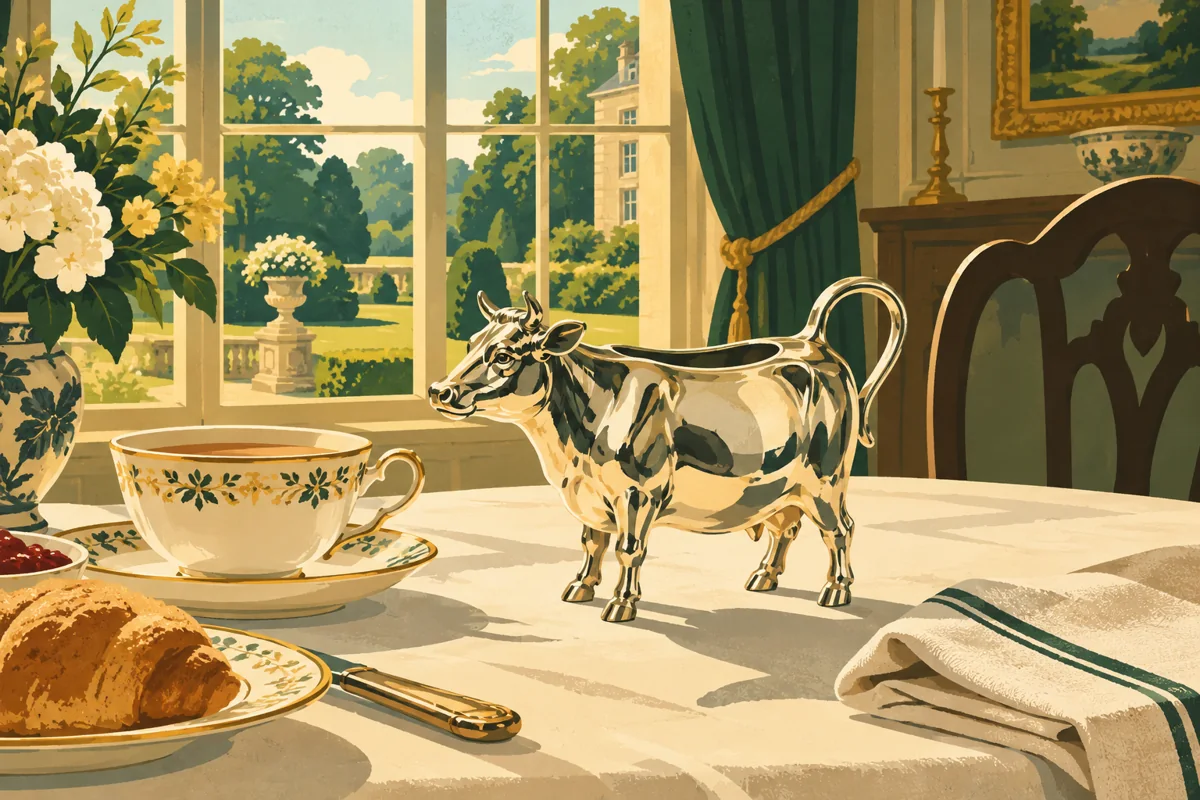
Highclere Castle represents Totleigh Towers, the home associated with Sir Watkyn Bassett and some of Bertie’s most uncomfortable visits. The location record for “The Silver Jug”, also known as “The Cow-Creamer”, names Highclere in that role. Reading The Code of the Woosters alongside these scenes shows how a recognisable exterior becomes a shorthand for an entire household. The building’s presence in another television production should not be confused with the particular characters and fictional estate it represents here.
Sidmouth, Devon: Victoria and Riviera hotels
The episode guide identifies Sidmouth’s Victoria and Riviera hotels among the locations for “Pearls Mean Tears”. They help construct the fictional seaside resort of Westcombe-on-Sea. This provides a different sort of Wodehouse setting from the imposing country-house approach: a resort where travel, hotel life and social encounters bring the characters together. When revisiting the episode, distinguish the real hotel names from the invented resort name; the screen story is not claiming that Westcombe is an alternative name for Sidmouth.
Barnsley Park, Gloucestershire
Barnsley Park, near Cirencester, provides Brinkley Court exteriors in the first series. That makes it a useful visual companion to the early television treatment of Aunt Dahlia’s household. Brinkley Court is a recurring fictional home, however, and the production did not retain the same exterior throughout its run. Compare Barnsley with Hall Barn rather than trying to reconcile them as different sides of one property. Continuity belongs to Aunt Dahlia and the story even when the physical building changes.
Hall Barn, Beaconsfield, Buckinghamshire
Hall Barn takes the exterior role of Brinkley Court in the fourth series. It should therefore appear alongside Barnsley Park in a guide to Aunt Dahlia’s television home. This change offers a simple way to follow the distinction between fictional and production geography: the audience returns to the same household, but the camera returns to a different estate. Readers interested in Brinkley itself can continue with Right Ho, Jeeves and the later books set around Aunt Dahlia’s hospitality and demands.
Englefield House, Berkshire
Englefield House appears as Ditteridge Hall in the opening episode, “Jeeves’ Arrival”. The episode-specific location record supplies the fictional house name, and the estate’s screen history is also recorded in its encyclopaedia entry. For a first-time viewer, it is a useful location to pair with the beginning of the television series. For a reader, it is a reminder to follow the episode’s actual story sources rather than assume every country-house sequence comes from a novel named after its setting.
Haddenham, Buckinghamshire
Haddenham contributes the village environment around Totleigh Towers. The location list for “The Silver Jug” identifies St Mary’s Church as Harold Pinker’s church and the rectory at Church End as his rectory; Eight Bells House at Church End represents the village post office. These separate identifications are more useful than simply labelling the entire village “Totleigh”. They show how individual buildings support different parts of the story. They also do not imply that any private house is open for visitors.
Polesden Lacey, Surrey
Polesden Lacey is documented in the “Chuffy” location record for exterior scenes at Chuffnell Hall. It belongs beside Wrotham Park, rather than replacing it, in an account of the television estate. The shared fictional label explains how viewers can remember apparently different views of Chuffy’s home without either identification being mistaken. It is a good example to keep in mind when following any filming-location trail: a screen property can be assembled from more than one real property.
Long Crendon, Buckinghamshire
Long Crendon appears in the location records for “Kidnapped”. The High Street contributes several identifiable buildings, including Tudor Cottage, the Old Bakery and Madoes, which represents the police station. Together these credits show how a village can supply several brief pieces of action rather than one continuous destination. Long Crendon and Clovelly are geographically separate filming sites within the same episode. Following the story’s movements is therefore different from plotting the order of the real locations on a map.
Horsted Keynes station, Bluebell Railway, West Sussex
The Bluebell Railway’s own newsletter records Horsted Keynes station becoming Chufnell Regis and Westcombe-on-Sea for Jeeves and Wooster. This first-hand railway source is valuable because station identities can be changed by signage and dressing. It also connects two otherwise separate strands of the series’ seaside geography. When watching an arrival or departure, the fictional station name tells you where the characters are meant to be; the railway credit tells you where that part of their journey was actually filmed.
Senate House, Bloomsbury, London
The University of London includes Jeeves and Wooster in Senate House’s official television credits. Its account highlights Charles Holden’s Modernist building and its suitability for screen work. The production connection is secure without assigning every scene or doorway to a particular episode. Senate House broadens the guide beyond rural estates: the series also needs urban architecture with a convincing period presence. Use the university’s credited building as the starting point for comparison, rather than treating every London street sequence as part of this location.
Joyce Grove, Nettlebed, Oxfordshire
Joyce Grove represents Deverill Hall in the 1992 episode “Right Ho, Jeeves”. The property’s developer records that filming connection in its account of the estate’s screen history. This is also a useful warning about titles: the episode’s name is not a guarantee that its principal country-house plot comes from the novel Right Ho, Jeeves. Deverill Hall belongs to the world of The Mating Season. Our episode guide separates the broadcast title from the books and stories adapted.
Stanway House, Gloucestershire
Stanway House is listed among the locations for “The Purity of the Turf”. The episode-specific credit is the reason for its inclusion, and it provides a clear place to begin a scene comparison. For readers moving between television and prose, use the episode and story titles as your guide to the action. The presence of a substantial house should not lead to an assumption that every sequence was drawn from one of the later country-house novels.
Dorney Court, Buckinghamshire
Dorney Court is recorded as a filming location for “Comrade Bingo”, also listed as “Aunt Dahlia, Cornelia and Madeline”. British Comedy Guide and the DiCamillo architectural database agree on the building and episode, although their fictional-house labels differ. The secure identification is therefore Dorney Court’s appearance in that episode. Keeping the location separate from the disputed label is more useful than silently choosing one and presenting it as certain. Either episode title will help locate the relevant instalment.
Halton House, Buckinghamshire
Halton House’s documented screen credits include “Bertie Sets Sail”, the first episode of series three. This identifies a specific instalment without requiring a guess about which fictional room the building supplies. It is particularly useful for viewers tracking the series as its action expands beyond the familiar English country-house visits. Consult the episode itself alongside the location record, and keep this credit distinct from the many other television and film productions that have also used Halton.
Gaddesden Place, Hertfordshire
Gaddesden Place appears as Lord Worplesdon’s New York residence in “The Once and Future Ex”. The documented identification provides a particularly clear example of an English filming location representing an American setting. It belongs in the same geographical guide as the English country houses, even though the story places it across the Atlantic. For viewers tracing the New York episodes, the essential distinction is between the setting named in the dialogue and the Hertfordshire house used to create it.
Home House, Portman Square, London
The DiCamillo architectural database identifies Home House at 20 Portman Square as the interior of Bobbie Wickham’s London house in “Tuppy and the Terrier”, also known as “Bertie Is in Love” or “Golf Tournament”. The identification is specifically an interior credit. It therefore gives viewers a more precise comparison than a general claim that the entire fictional residence was filmed there. The townhouse belongs among the series’ London locations, distinct from the country estates that dominate many location lists.
Clandon Park, Surrey
The DiCamillo architectural database credits Clandon Park in “Kidnapped”, also called “The Mysterious Stranger”. This adds another real building to an episode whose documented locations already include Clovelly and Long Crendon. Clandon’s subsequent history also matters when comparing the programme with the present building: it suffered a major fire in 2015, long after filming. The television image records an earlier state of the house, so it should not be treated as a preview of what a visitor will see today.
Stowe: Oxford Bridge, Buckinghamshire
DiCamillo identifies Stowe’s Oxford Bridge as part of the grounds of Ditteridge Hall in the opening episode, “Jeeves’ Arrival”. This is a specific landscape credit rather than evidence that the whole of Stowe House represented Ditteridge. Pair it with Englefield House, which supplies the documented house location. The combination shows how the programme can join a building and a landscape feature from different estates into an apparently coherent destination for Bertie and Jeeves.
2 Mansfield Street, Marylebone, London
The Spanish-language Wikipedia series guide identifies 2 Mansfield Street as the exterior used for Berkeley Mansions, Bertie’s London residence. Anglotopia’s history of the programme also reports the same address. The distinction between exterior and interior is essential here: recognising the entrance does not establish that the rooms seen after Bertie goes inside occupy the same building. This London address supplies the screen identity of his home, rather than a public attraction with a recreated apartment to explore.
Planning a visit and returning to the books
Treat this as a guide to screen geography, not a statement of current admission arrangements. Houses may be private homes or working institutions, and a filming credit confers no right of entry. Before travelling, check the place’s own current visitor information. Village streets, hotels, churches and railway stations also have ordinary uses that continue independently of their screen associations.
For a reading route, match the fictional destination to the book rather than the real county. Chuffnell Hall and Chuffnell Regis lead naturally to Thank You, Jeeves; Totleigh Towers makes The Code of the Woosters a rewarding next choice; Deverill Hall points towards The Mating Season. Brinkley Court offers several possibilities, beginning with Right Ho, Jeeves. The television buildings give these places memorable faces, while the books let Bertie’s narration determine their atmosphere. Comparing both versions is more revealing than looking for a single house that explains all of Wodehouse’s country-house comedy.